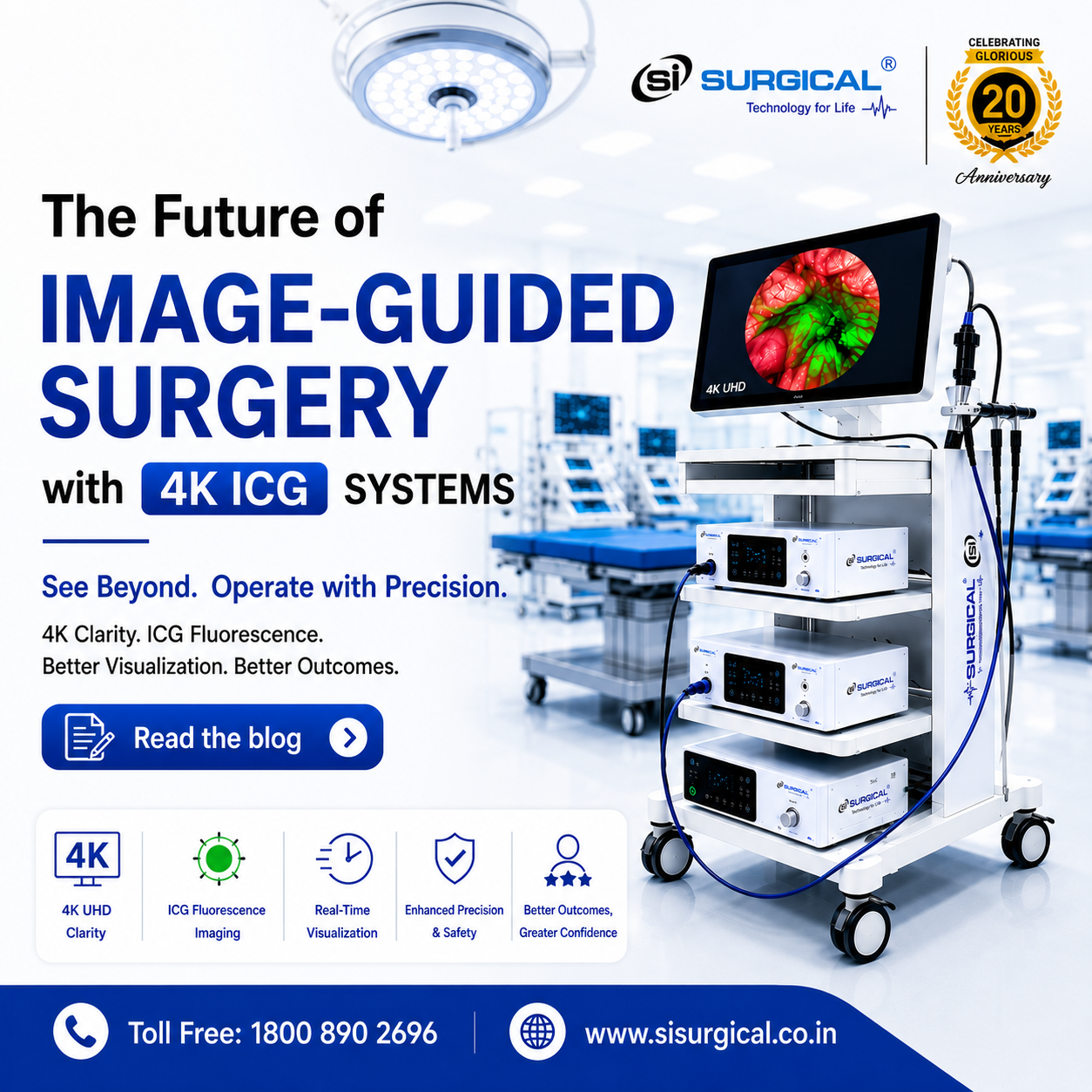
Modern surgery is evolving rapidly, driven by innovations that improve precision, safety, and patient outcomes. Among the most significant advancements is the 4K ICG Imaging System, which combines ultra-high-definition visualization with fluorescence-guided imaging to help surgeons perform complex procedures with greater confidence.
A 4K ICG Laparoscopy System utilizes Indocyanine Green (ICG) fluorescence technology and Near Infrared (NIR) imaging to provide real-time visualization of blood vessels, tissue perfusion, lymphatic pathways, and critical anatomical structures. This enhanced visibility allows surgeons to make better intraoperative decisions and achieve more accurate surgical outcomes.
Why 4K ICG Technology Matters
Traditional imaging systems often rely on standard white-light visualization. In contrast, a 4K ICG Camera System enables surgeons to see beyond the visible spectrum, providing detailed insights into tissue viability and vascular structures.
Key Benefits of 4K ICG Imaging
Ultra-clear 4K UHD visualization
Real-time fluorescence imaging
Enhanced surgical precision
Improved tissue perfusion assessment
Better identification of critical anatomy
Reduced surgical complications
These advantages make ICG Fluorescence Imaging Systems an essential component of modern minimally invasive surgery.
Applications Across Surgical Specialties
The adoption of 4K ICG Imaging Systems continues to grow across multiple disciplines, including:
Colorectal Surgery
ICG imaging helps assess bowel perfusion and reduce the risk of anastomotic complications.
Hepatobiliary Surgery
Surgeons can clearly visualize bile ducts and vascular structures, improving procedural safety.
Oncology Surgery
Fluorescence-guided imaging assists in identifying tumor margins and lymphatic pathways.
Gynecology and General Surgery
Enhanced visualization supports greater accuracy and improved patient outcomes.
The Future of Image-Guided Surgery
As healthcare technology advances, 4K ICG Camera Systems are expected to play a central role in the development of smart operating rooms, robotic-assisted surgery, and AI-powered surgical guidance. Hospitals are increasingly investing in these technologies to improve clinical performance and deliver superior patient care.
The combination of 4K Ultra HD imaging, Near Infrared Imaging Systems, and ICG Fluorescence Technology is transforming surgical visualization and setting new standards for image-guided surgery.
Conclusion
The future of surgery lies in technologies that enhance visibility, precision, and patient safety. A 4K ICG Tower empowers surgeons with real-time, high-definition imaging that improves decision-making and surgical outcomes. As more hospitals adopt advanced Fluorescence Guided Surgery Systems, image-guided surgery will continue to redefine the standards of modern healthcare.
Organizations seeking advanced surgical visualization solutions should partner with a trusted 4K ICG Camera Manufacturer to ensure access to reliable, innovative, and future-ready imaging technology.